

Table of Contents
- What Does Glasses Frame Size Actually Mean?
- How Does Frame Size Change the Way Your Face Looks?
- Frame Width vs Frame Thickness: They Are Not the Same Thing
- How Frame Size Interacts With Face Proportion
- A Quick Frame Size and Style Guide
- How Shape Changes the Effect of Frame Size
- How Frame Color Can Change Perceived Size
- Real Donahugh Examples: How Similar Measurements Create Different Looks
- How to Choose Your Frame Size When Shopping Online
- Frame Size, Material, and Visual Weight Should Be Considered Together
- Choosing Frame Size for Personal Style
- Frequently Asked Questions
- Final Thoughts: Use Frame Size as Both a Fit Tool and a Style Choice
Two important factors to consider with size and frames are fit and the glasses' appearance. Wide frames will fill the face more. They also may enhance their visibility. Smaller frames have less of an impact, are not 'as loud' and give a lighter impression. You shouldn't choose glasses based on just one number, though. Fit, shape, thickness, material, and frame width are all important.
A big consideration in eyeglass frame size is fit and style. This is especially true for men's eyeglasses or designer glasses purchased online. You may not be able to try them on first; you might have to wait longer to test them. You will gain more insight into what this term means, what is involved in determining the size of the frames, and how to compare frame sizes before purchasing.
What Does Glasses Frame Size Actually Mean?
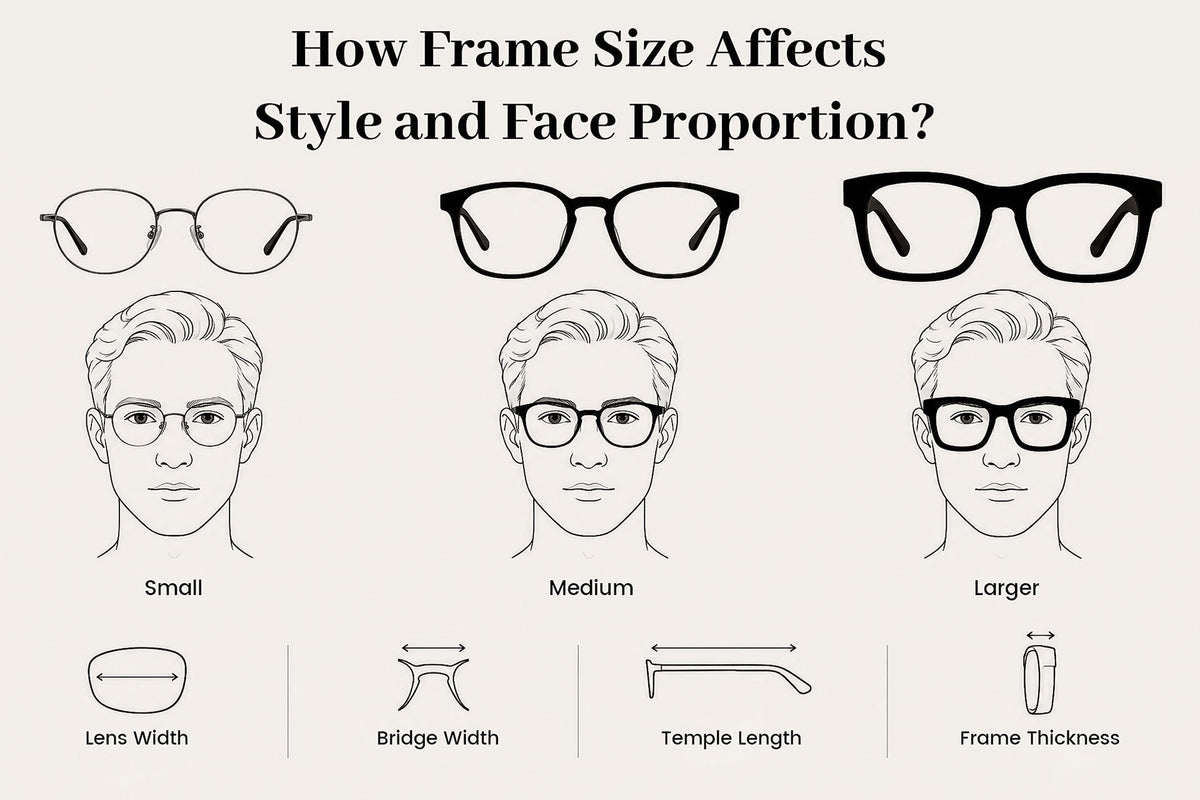
Glasses size isn't a single number. It has various units of frame measurements. These indicate the width of the lens, bridge, and full frame width, and the length of the temples. These numbers can be very helpful when shopping online.
Lens Width
The lens width is the width of each lens. This helps you get a sense of how large the glasses are. However, it's not all that simple. Another factor is overall size, which relates to frame style and bridge width.
Bridge Width
Bridge width describes the glasses when they are worn on the nose. If the bridge doesn't fit properly on your nose, even more than you would specify in the picture, the pair of glasses may look good in the picture but won't when you actually wear them.
Temple Length
The size of the temple's "see-through length" reveals the length of its arms. The arms should extend from the frame to behind your ears. This primarily improves comfort and helps ensure the glasses stay on your face.
Overall Frame Width
Overall frame width helps determine whether the glasses fit your face width. Currently, Donahugh offers three popular frame-width ranges: 135mm to 140mm, 141mm to 146mm, and 147mm and above. These are the range sizes for Donahugh. They don't apply to all brands.
How Does Frame Size Change the Way Your Face Looks?
Bigger frames enclose more of your face. May enhance your eyeglasses. Light frames will accentuate your face and are likely to be smaller. Medium frames deliver a simple, no-frills style without looking too formal.
Smaller Frames Create a More Compact Look
Smaller frames are typically less noticeable. If you want an old-fashioned, simple look, they are a good choice. They can also help disguise the glasses. But it's not just for smaller people with smaller frames. Others just like a smaller-sized look.
Medium Frames Create Everyday Balance
Medium frames are a natural choice if you're looking for an everyday option. Medium frames offer balance without overwhelming your facial features.
Larger Frames Create More Visual Presence
Wide or deep frames will encompass a larger portion of the face. They totally can add more style. Some can also supply ‘facial coverage.’ Oversized sunglasses create this effect.
Retro sunglasses can also be created with a bigger frame size for a much more dramatic style. While an oversized style is different from a frame that doesn't fit, the following points still apply. The problem with size isn't the size itself, but a very personal one. It just provides a different appearance.
Frame Width vs Frame Thickness: They Are Not the Same Thing
No matter the frame width, its thickness doesn't necessarily match the width.
Glasses size refers to the actual size of the glasses. Frame thickness refers to the weight or boldness of the glasses. Two frames may be almost equal in dimension, but one frame's rim may be slightly thicker, which can create a completely different impression.
Thick Frame Glasses
Thick Frame Glasses may not be the same size, but they will appear larger and bolder by comparison. Rim thickness matters. Dark Lenses can also help enhance thick-frame glasses, making them even more glamorous. Acetate material and darker lenses may also magnify this effect.
Thin and Mixed-Material Frames
In general, the thinner they are, the lighter the metal framework will look. Mixed-material frames can also appear lighter. If you are considering heavy-duty wood frames, you should also consider these, which are often comparable but smaller because they will not look as hefty.
How Frame Size Interacts With Face Proportion
Observe how the face proportion fits the frame size. Let's examine the relationship between face proportion and frame size. This is a crucial shape feature, yet not the only one when considering facial form. Glasses size, feature placement, and the distance between facial features may affect how the glasses look.
Wider Faces and Frame Width
If a frame is much smaller than your face, it will look small. It may even feel constricting at the temple. No single frame works for all faces. The main reason to avoid a narrower frame that feels undersized is to prevent it from looking "small" on the wearer.
Longer Faces and Lens Depth
Deep lenses have a large depth. This may affect how the glasses look on a longer face. Different lens depths can create different balances. Check out our guide to choosing the most suitable pair of specs for each face shape to learn more about face shape and how to choose the right specs for the right face shape.
Shorter or Rounder Faces
Always look at frame size in conjunction with frame shape. Smaller faces pair well with proportional frames, but larger frames can also create a stylish contrast. The frame shape is also important to consider.
The finish depends on the frame width, lens depth, and how the mirror lines are produced. For instance, if you are choosing a pair of sunglasses for a round face, don't focus on size or shape; focus on the right fit.
A Quick Frame Size and Style Guide
|
Frame Direction |
Visual Effect |
Style Goal |
|
Smaller / compact |
Lighter look |
Simple, classic |
|
Medium/balanced |
Balanced look |
Everyday use |
|
Wide frames |
More width |
More noticeable |
|
Deep lenses |
More height |
More face coverage |
|
Oversized frames |
Bigger look |
Bold fashion |
|
Thick frames |
Heavier look |
Strong definition |
|
Thin frames |
Lighter look |
Simple, clean |
These are style suggestions for your face; they are not rules or requirements. The real fit will vary based on frame dimensions and materials.
How Shape Changes the Effect of Frame Size
The size corresponds with the shape! Frames can be the same size and shape but may be quite different.
Round Frames
Small round frames can lend an easy, light appearance! The basic round eye shape can be elegant, but it can be striking when the round sunglasses are larger.
Browline Frames
Browline Glasses feel heavier at the top. The same goes for dark-colored sunglasses and sunnies with a deep hinge. They can look robust if they're not too heavy, thanks to their browline design.
Aviator Frames
Men's Aviator-style sunglasses are a good example of this. Huge-sized lenses can block a fair amount of the face. Lightweight Metal Rims can be used with a skinny rim.
Square and Rectangular Frames
Confident and rectangular frames form definite lines. This can help to make them appear more resilient. With this in mind, a wide square frame will look more substantial and impressive than a narrow round frame with nearly the same measurements.
Oversized and Retro Frames
Oversized sunglasses are larger than normal. They are an essential part of the style. They also support larger frames in retro sunglasses. So, don't rely on conventional size measurements for these frames.
How Frame Color Can Change Perceived Size
No, colors don't affect the size of your glasses. They can alter the perceived size and visibility of your glasses. Dark colors might be more attention-catching. To make the frame look lighter, use lighter colors (transparent, pastel, or watercolor).
● Yellow glasses are attention grabbers. If you want to be noticed, it's time to dust off your green sunglasses!
● Bright orange can create a robust, cuddle-worthy vibe. To look cooler and more colorful, wear blue sunglasses.
● Tinting is also a function that's applied to sunglass lenses. This can cause the whole pair to stand out more.
Real Donahugh Examples: How Similar Measurements Create Different Looks
Playing with the real Donahugh frames will show you how size, shape, and design play out.

Boden O: 51-22-148
Boden O is a square-shaped pair of prescription glasses. The lens width is 51mm, the bridge width is 22 mm, and the temple length is 148 mm. The following measurements are interpreted as follows: The lens width does not fully indicate the size of the lens frame.

Vincent O: 47-24-145
The "Vincent O" frame is round. This incorporates a 47mm wide lens, a 24mm broadened bridge, and 145mm-long temples. It has a smaller lens width than Boden O, but a broader bridge. That is why you can't rely on only the first number to determine frame size.

Perry O: 52-18-145
Perry O is a browline-style frame with a stronger upper frame design. The width is 52 mm, the bridge width is 18 mm, and the temple length is 145 mm. The browline design gives it a sturdier look. There's more to the dimensions than meets the eye.
How to Choose Your Frame Size When Shopping Online
The easiest way to search for frame size online is to compare the new frame with the glasses you already wear. Try on a pair that fits you and is comfortable to wear.
●Step 1: Check a Pair You Already Own
Take out the temple arms from your glasses. The printout lists frame sizes.
Another option is to measure the glasses you currently wear. Use the measurements above in comparing new frames.
●Step 2: Compare Lens and Bridge Measurements
As never before, look beyond lens width. Bridge width + Lens width.
If the lens size is smaller and the bridge width is wider, the total frame width may stay the same, but the lenses will be smaller.
●Step 3: Compare Overall Frame Width
Another good indicator is whether the product is displayed on the full width of the frame on the product page. Compare to the size of the current eyeglasses.
●Step 4: Decide How Much Visual Presence You Want
Think about how you will appear. Wearing more basic glasses may be more suitable. It may be better to wear a loose, comfortable look. Or you might prefer heavy, large spectacles!
Sizing and style make the difference here.
●Step 5: Review Product Photos and Fit Information
Before making an online purchase, consider the front and side views. Don't overlook frame size, either.
Read the material, bridge design, and return policy too. This may help with an unexpected fit.
Frame Size, Material, and Visual Weight Should Be Considered Together
Evaluate the size, type, and appearance of the frame as a package. Material can affect how a frame looks. Many shades of thick acetate sunglasses also have a thick rim, which can look heavier. Alternatively, if they're the same size, transparent frames may look lighter. Not every material will show a frame's weight. Final weight depends on the manufacturing method.
Choosing Frame Size for Personal Style
Proper facial proportions are not the only factors. It should also complement the style of glasses you want to wear.
Understated Style
Medium sizes and lighter frames work well if you want glasses to blend seamlessly into your outfit. These do not have to be the focus.
Classic Everyday Style
It's OK to use the same frame size for everyday wear. They're a great place to begin with when searching for the best men's eyeglasses for daily wear.
Bold or Fashion-Led Style
Fashion can make glasses stand out with wide frames and deep lenses. They also help you look influential, especially with thick frames
Designer and Statement Eyewear
It's not fact or fiction, but a frame's size can become a star attraction in a man's designer eyewear. Simple and bold Spec Sizes for Men are available. Designer optical frames for men can be basic or bold “statement” styles. Men can choose frames for everyday wear, as well as for daily enhancement.
Frequently Asked Questions
Why Can Two Frames With Similar Measurements Look Different on the Face?
Glasses can look different depending on the frame style. The thickness is also a factor. The design, color, and composition of the bridge; lens color and tint; and the position of the lens and hinge may influence how the frames look. Two frames can look different even if they have the same dimensions.
Should Sunglasses Be Larger Than Regular Eyeglasses?
Some sunglasses have larger lenses as they cover more of the face. Oversized sunglasses are one example. Larger eyeglasses, however, should fit just fine. The bridge and temples shouldn't be tight, but they also shouldn't be so loose that they move.
Can Frame Material Affect How Large Glasses Look?
Yes. Materials and frame design can affect the size of the glasses. It's been noted, for example, that acetate sunglasses might be heavier, and the rims might be heavier as well. Very light-colored frames are lighter. You can also find it in transparent, chromed sunglasses.
How Can I Tell If a Frame Is Too Wide or Too Narrow When Shopping Online?
First, select two numbers you're familiar with for comparison. This will give you a useful starting point. If you feel uncomfortable around your temples, then your frame may be too narrow. If it keeps slipping or sits above your face, you need a larger frame. Also, pay attention to the frame's structure and shape. Don't trust the numbers blindly, and don't pass up the chance to get the message across.
Does Prescription Strength Affect Which Frame Size I Should Choose?
A prescription does not indicate the best fit size. It can, however, help determine the best prescription frames and lens fit for you. Some prescriptions may need to differ by lens size. When selecting men's eyewear, consider lens needs as well as fit and style.
Final Thoughts: Use Frame Size as Both a Fit Tool and a Style Choice
Frame size affects the shape, the style it fits, and the amount of coverage. This is why it's best to have a pair of indicators. As a group, look at the bridge width, temple width, shape, thickness, and material.
The key to picking the ideal men's eyeglasses is to compare Donahugh's size, shape, and materials to a pair that fits well. This is much better than making a wrong guess about the size.

Commenta
Questo sito è protetto da hCaptcha e applica le Norme sulla privacy e i Termini di servizio di hCaptcha.